Transmitter presents:
Do I know you from somewhere?
ALISON KUDLOW • SUSAN MEYER • HANNA WASHBURN • SE YOUNG YIM
JULY 18 – AUGUST 16, 2026
OPENING RECEPTION: FRIDAY, JULY 17, 6-8 pm
Our deeply human, compulsive nature to scan the world for ourselves is a feature, not a bug. That damp stain on your ceiling that registers as a face? That vase on your shelf that, in the right light, remakes itself as a small figure? Psychologists call this pareidolia: the tendency to impose meaningful forms and patterns onto ambiguous or arbitrary objects and surfaces. Essentially, it’s to find meaning and presence where none was intended. We do this constantly and involuntarily, and it can offer moments of discovery, fear, and joy, but often it's a flicker we ignore or quickly move past. When that awareness causes pause, and we linger on it with attention or conviction, we call it anthropomorphism.
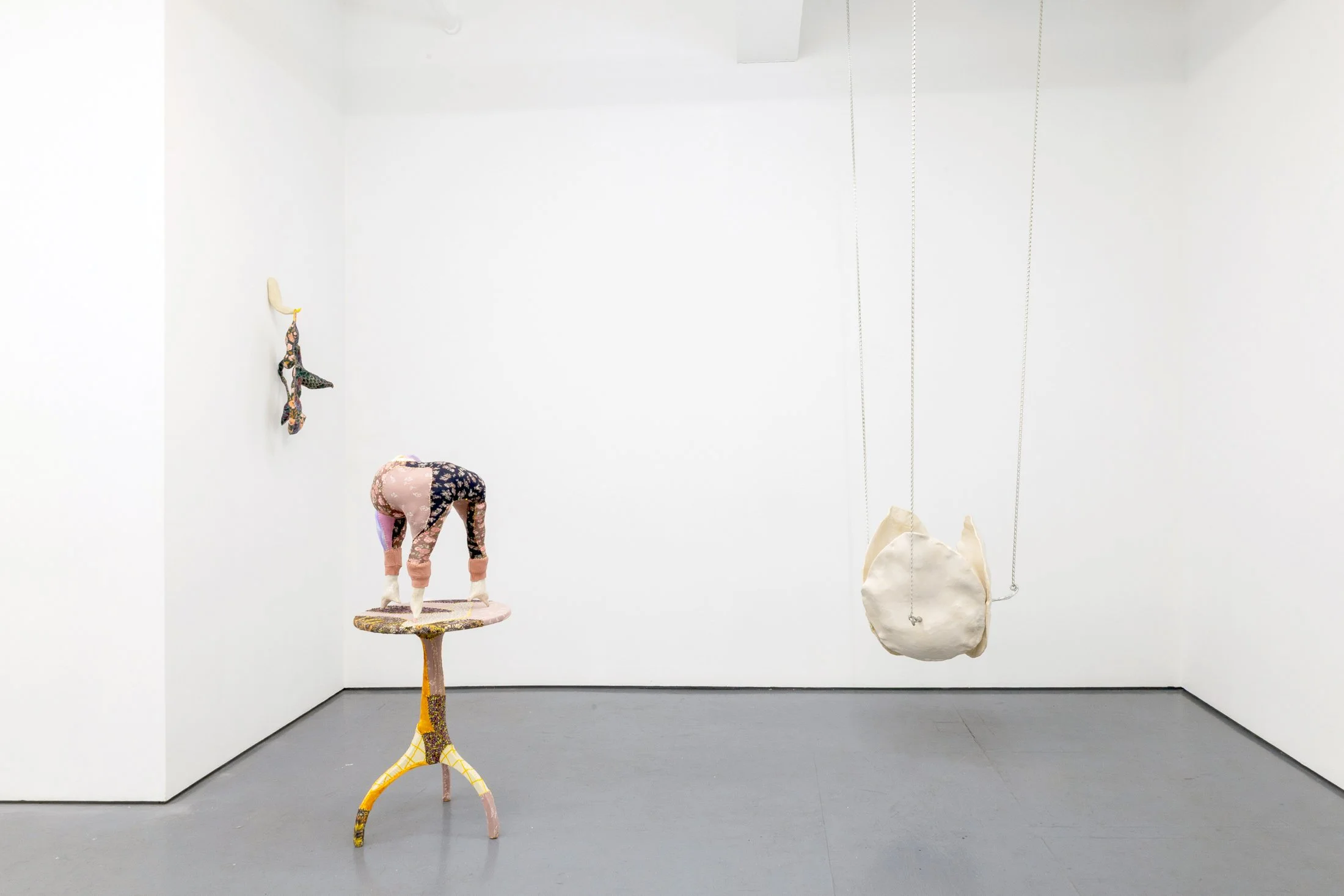
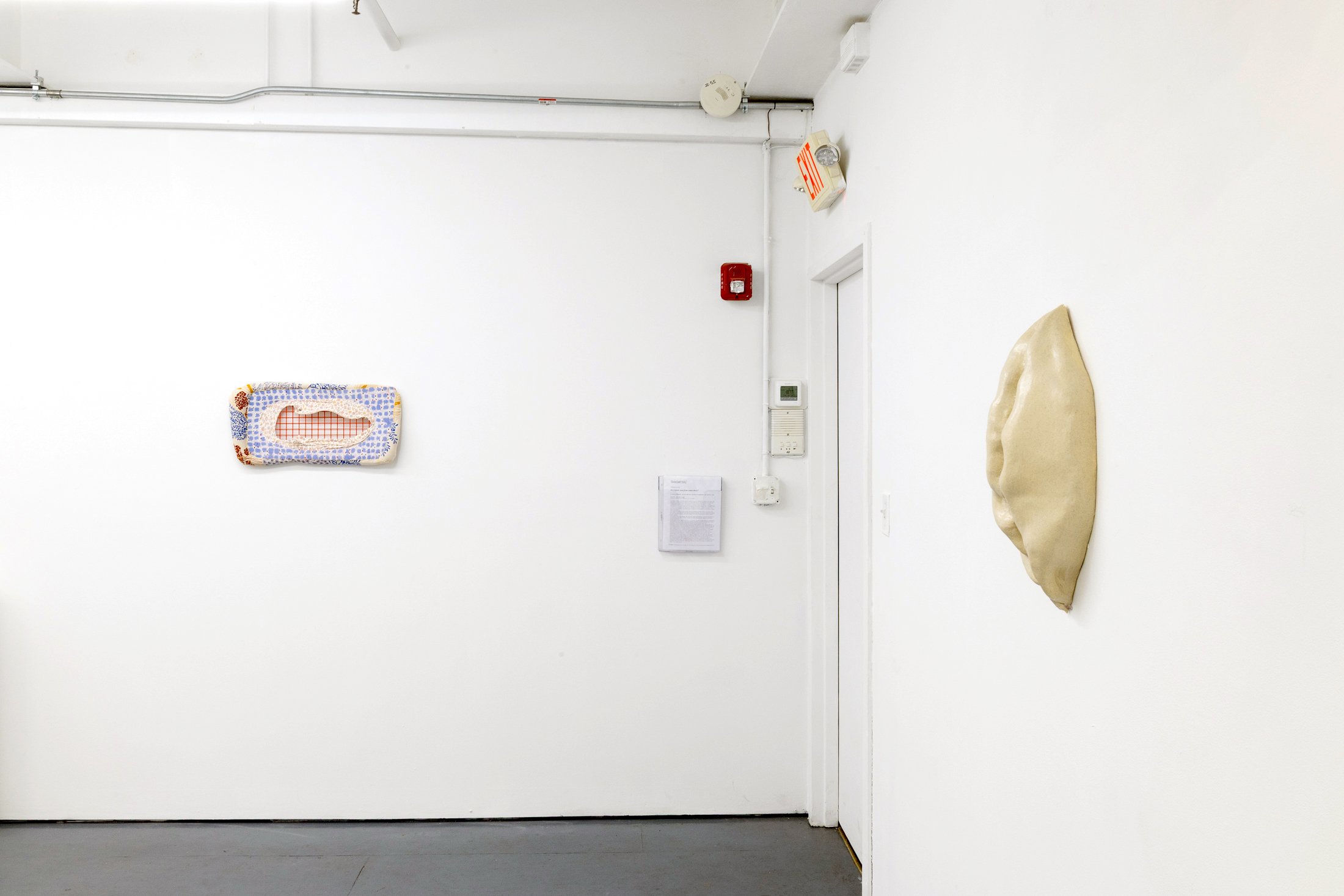
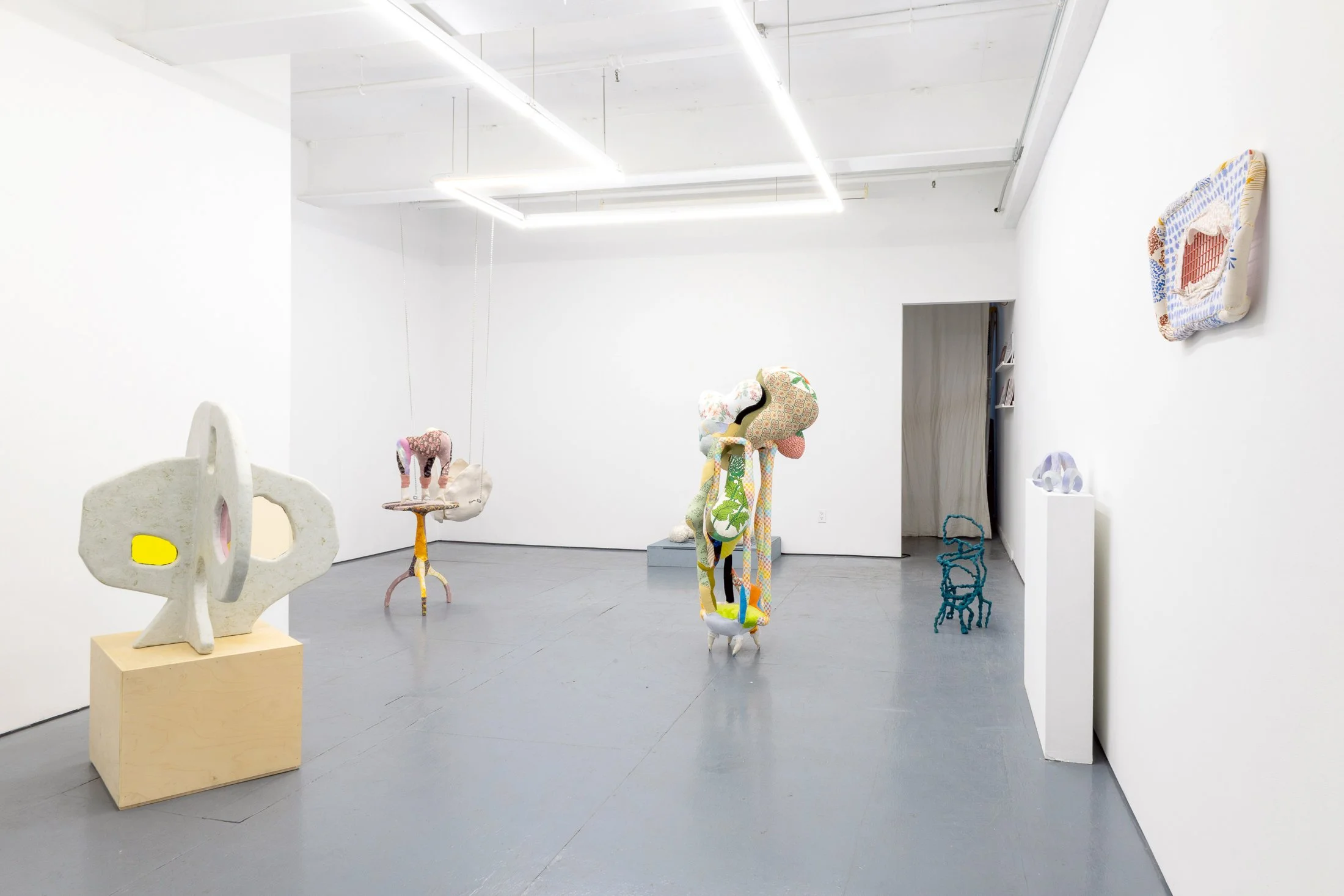
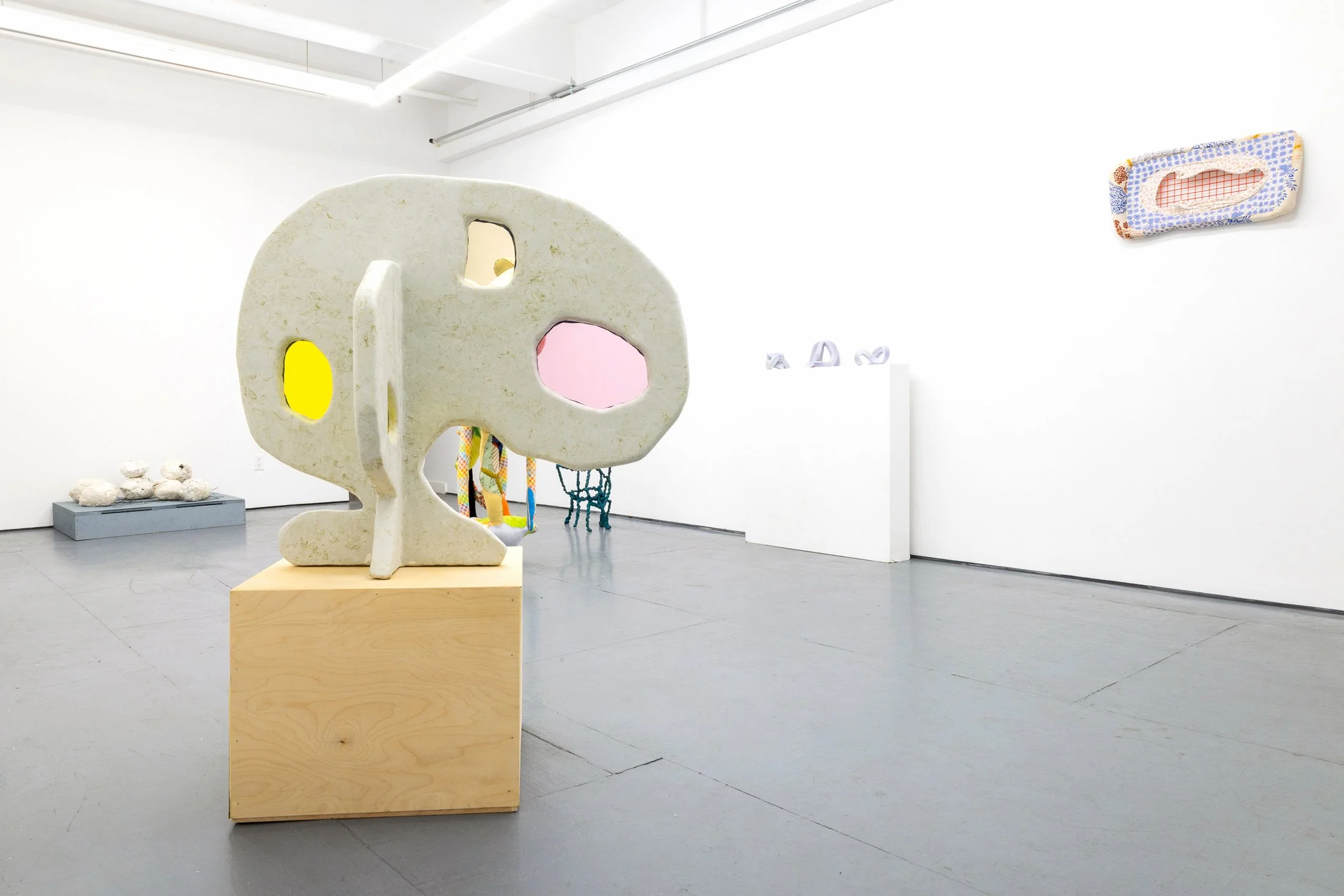
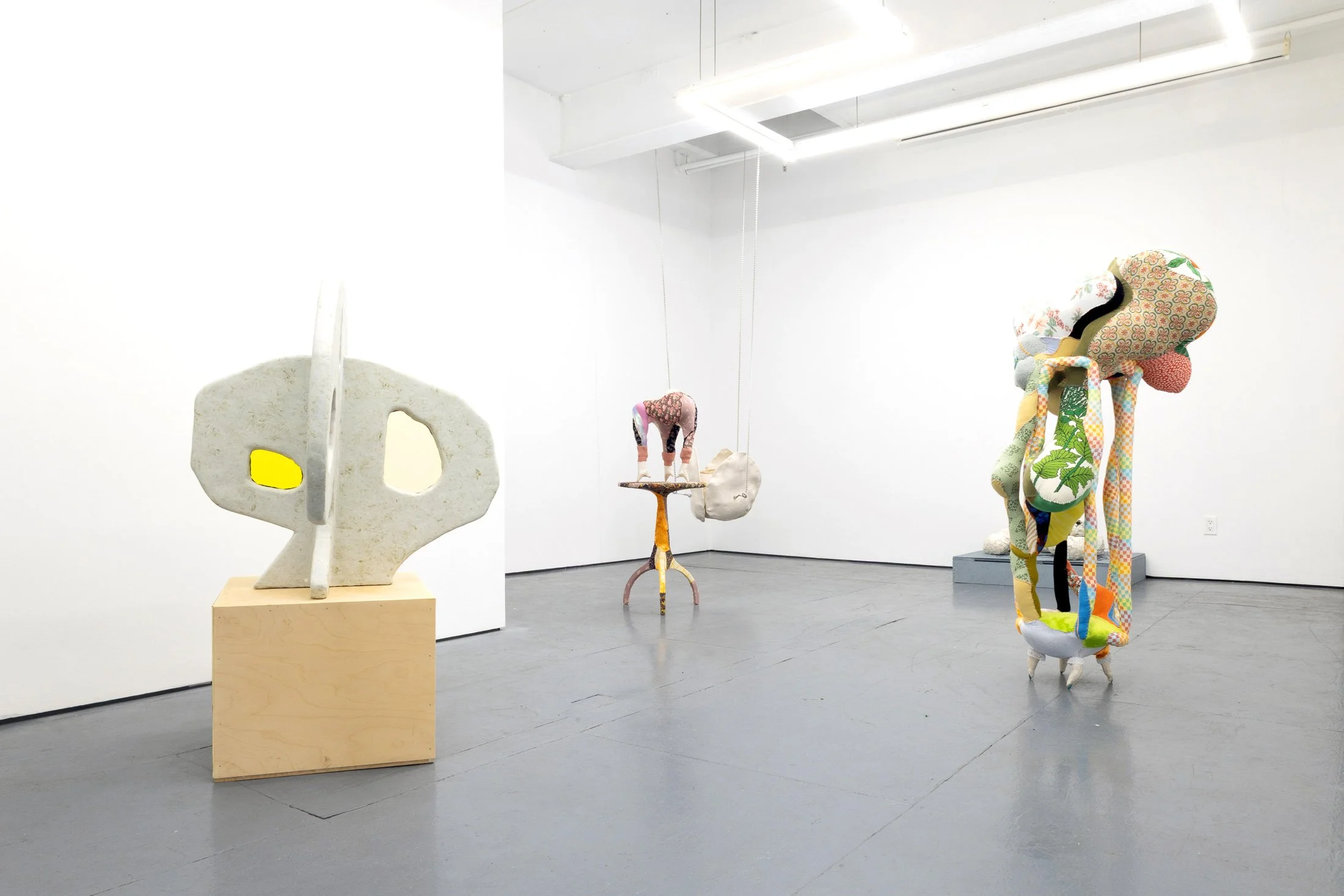
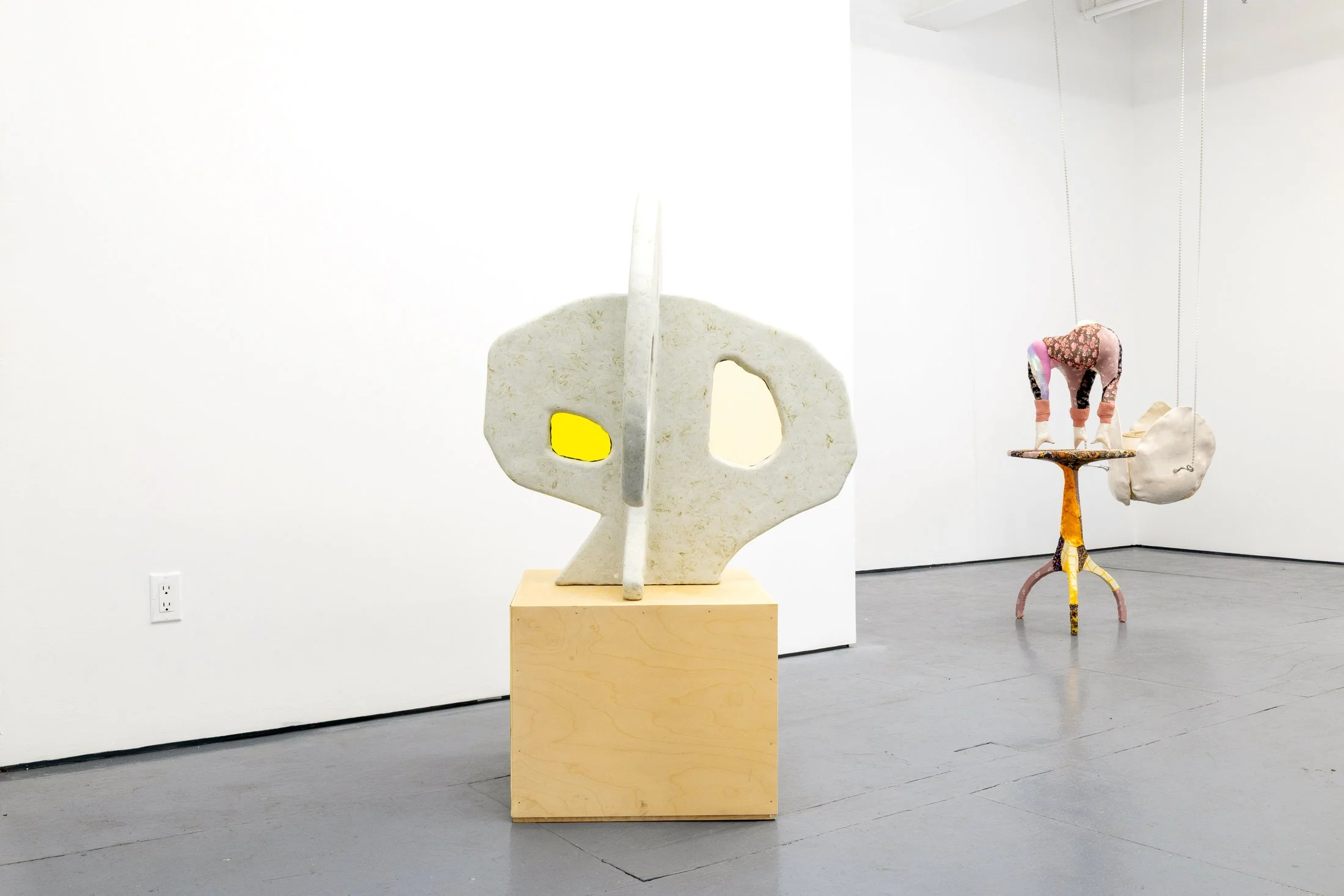
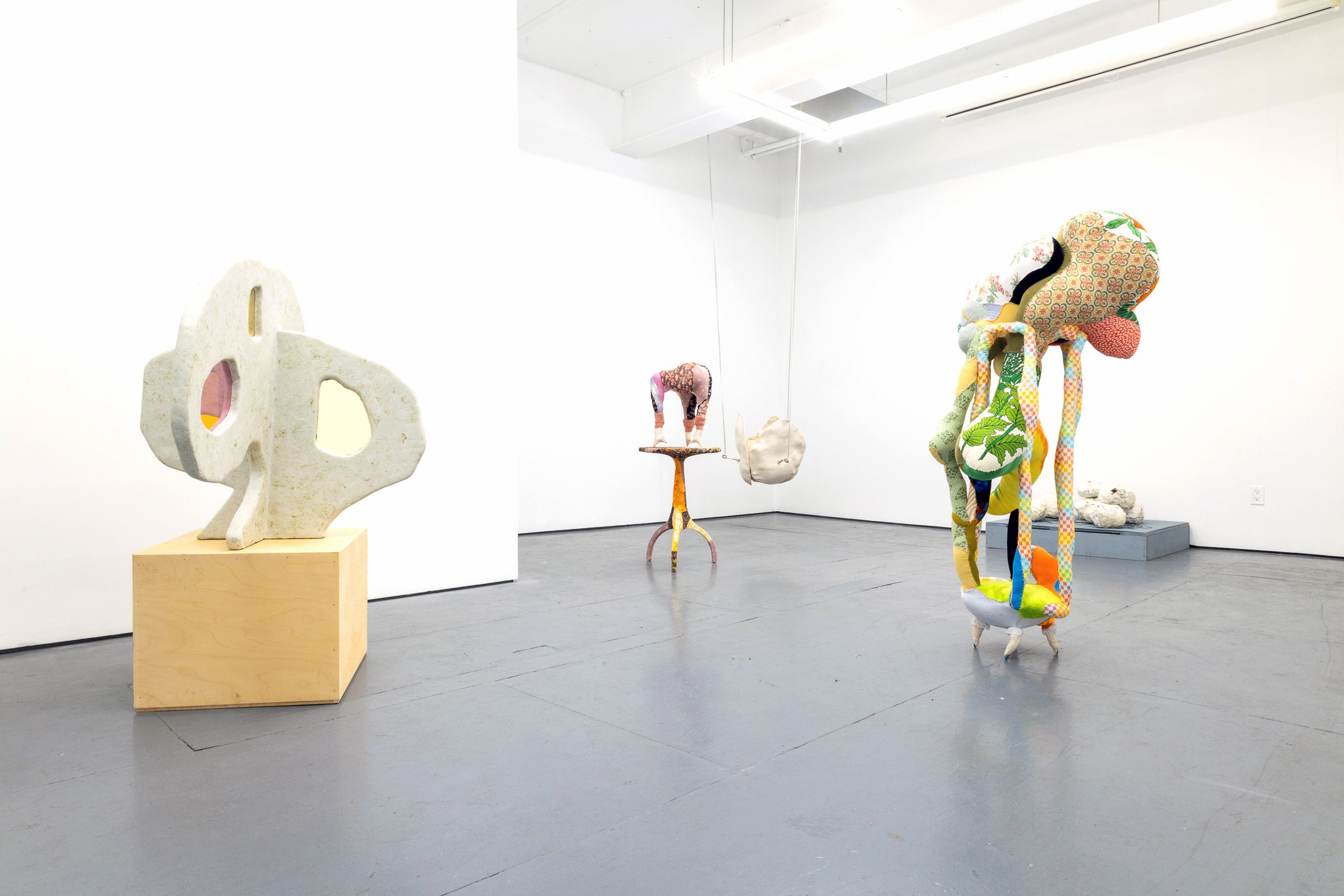
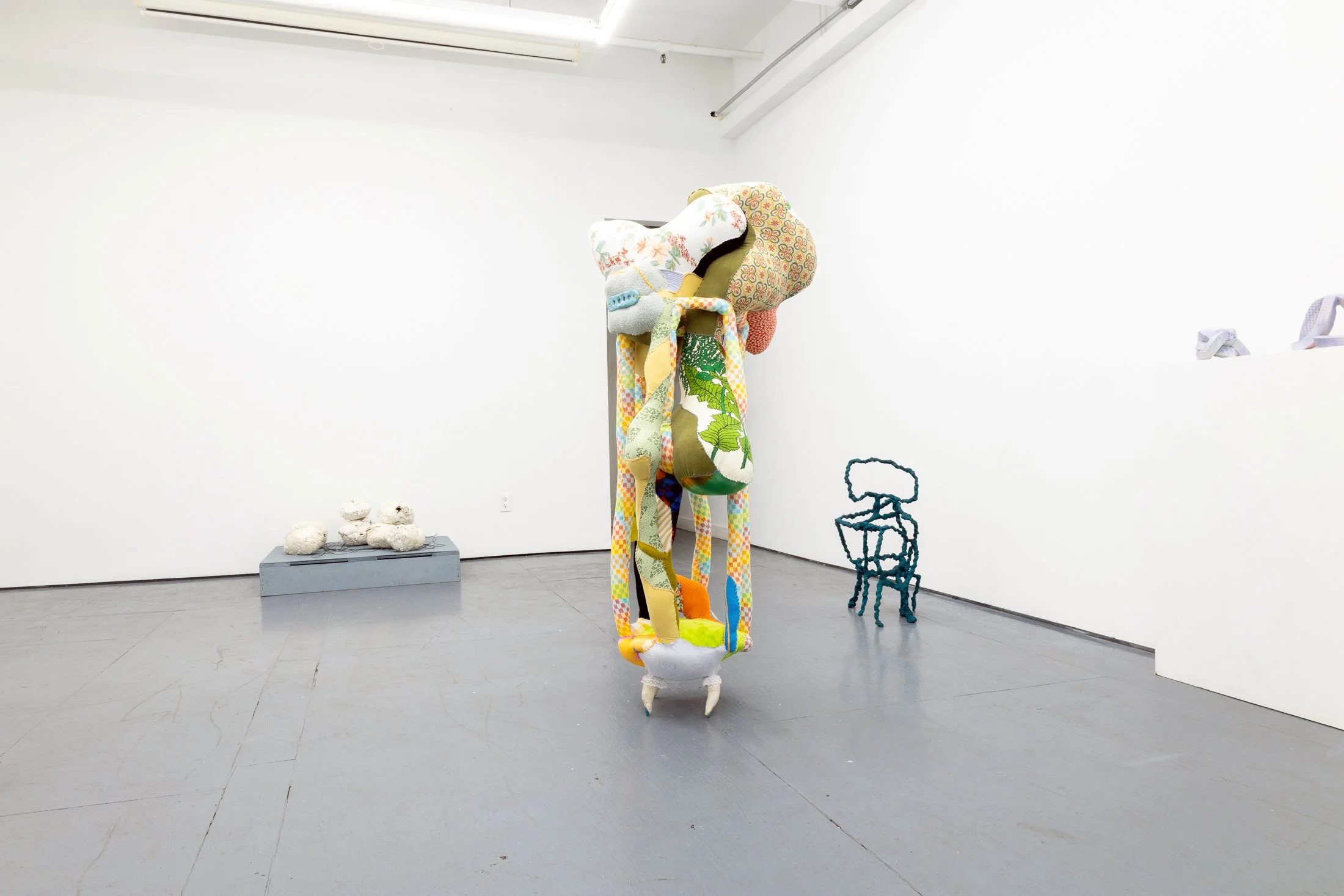
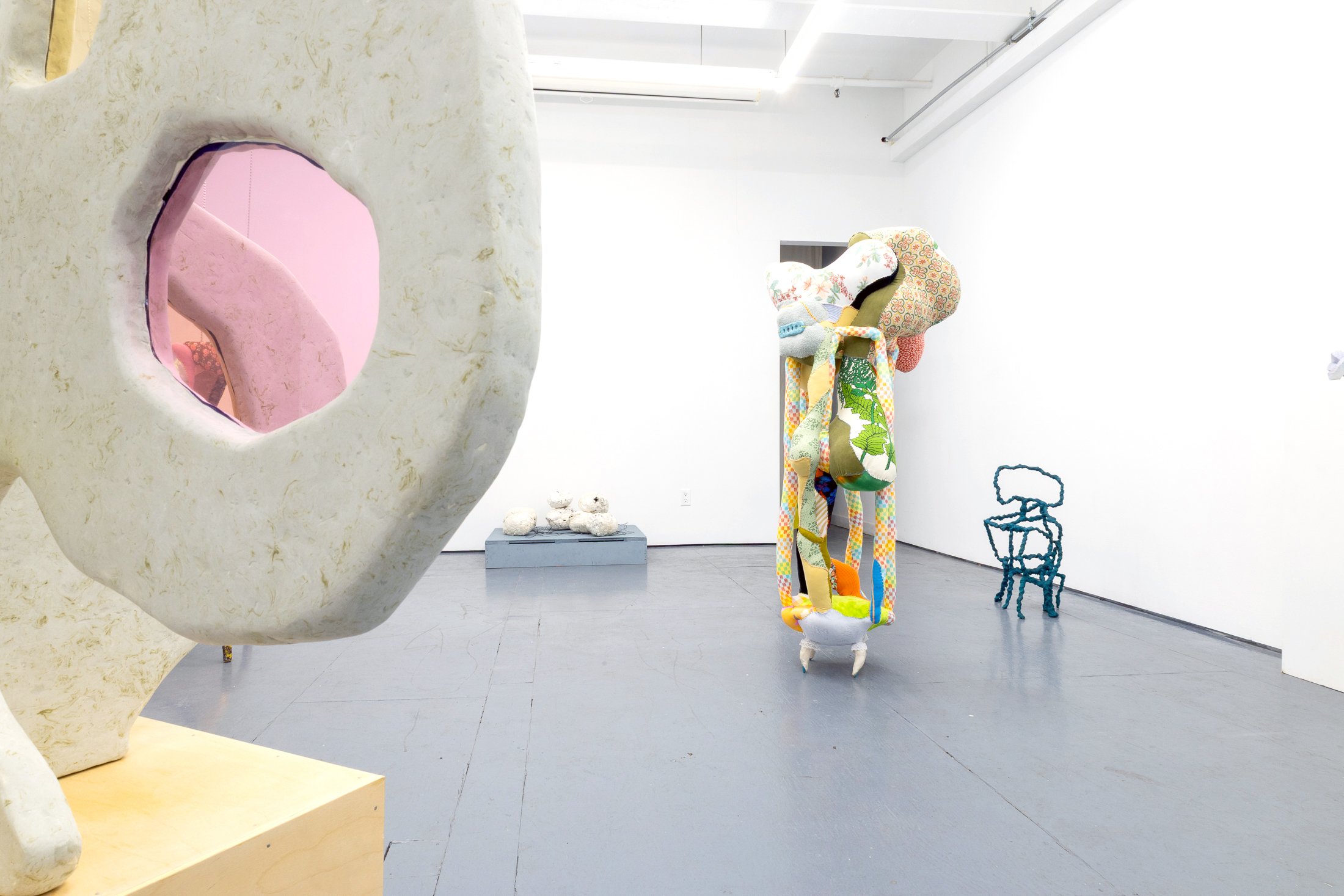
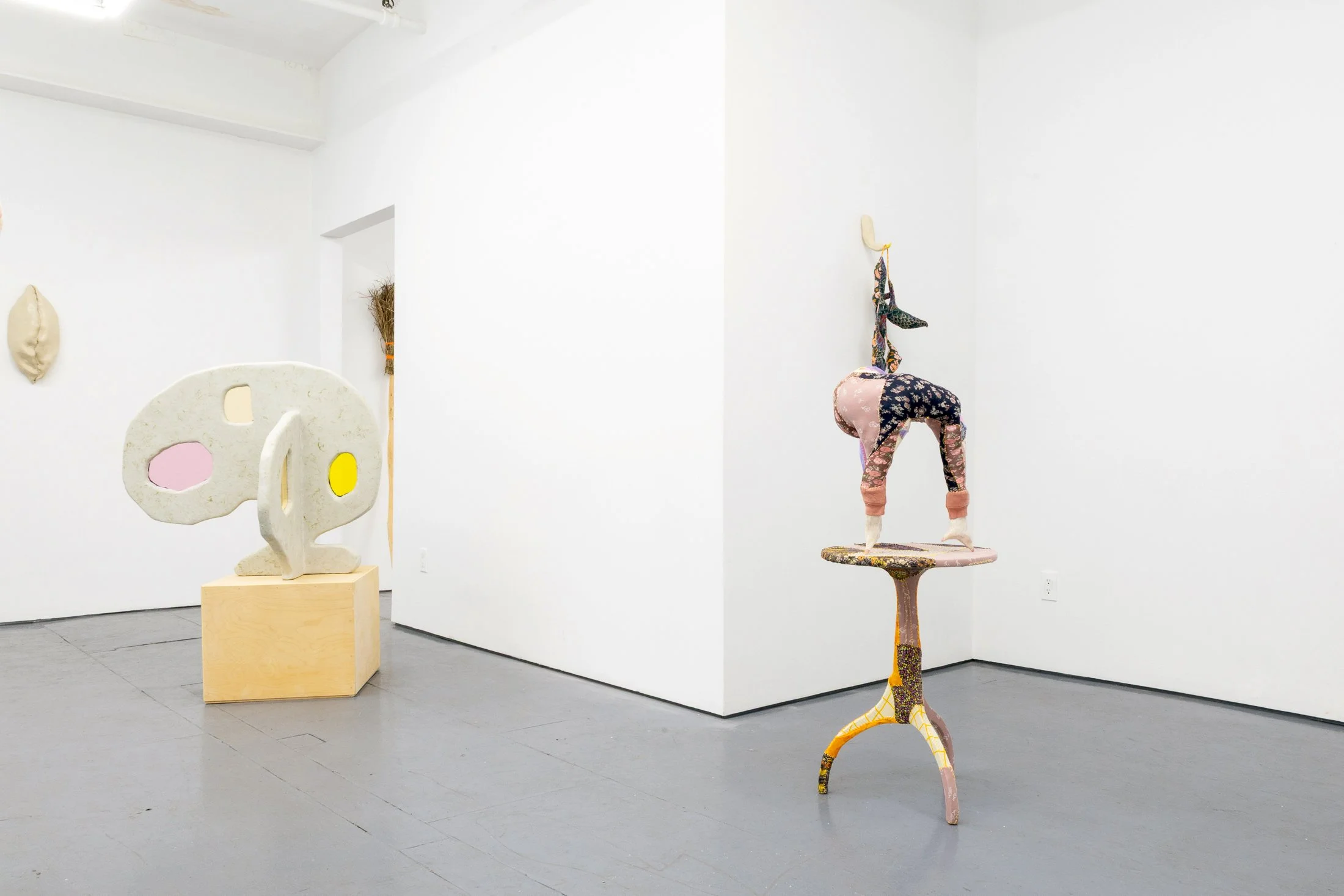
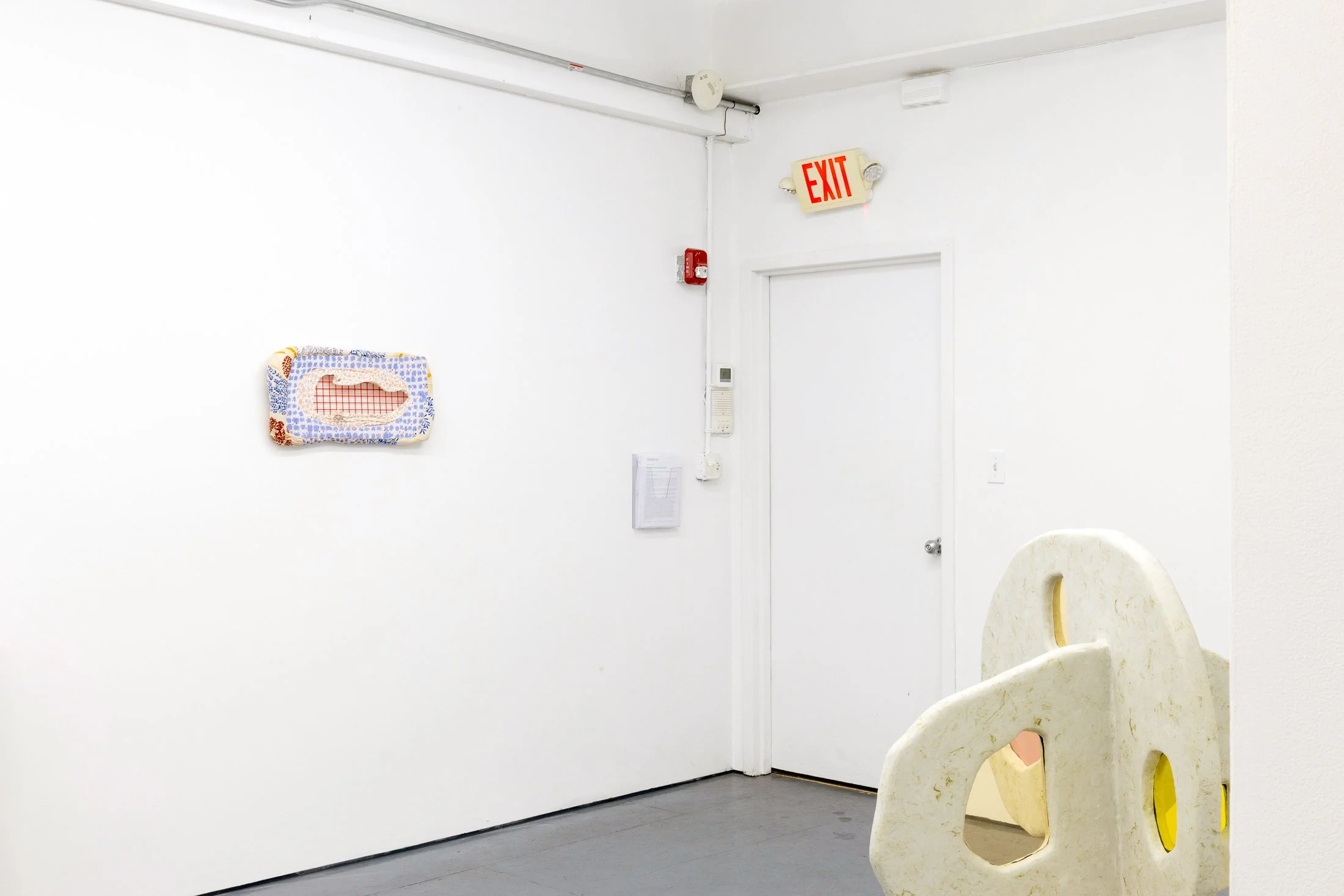
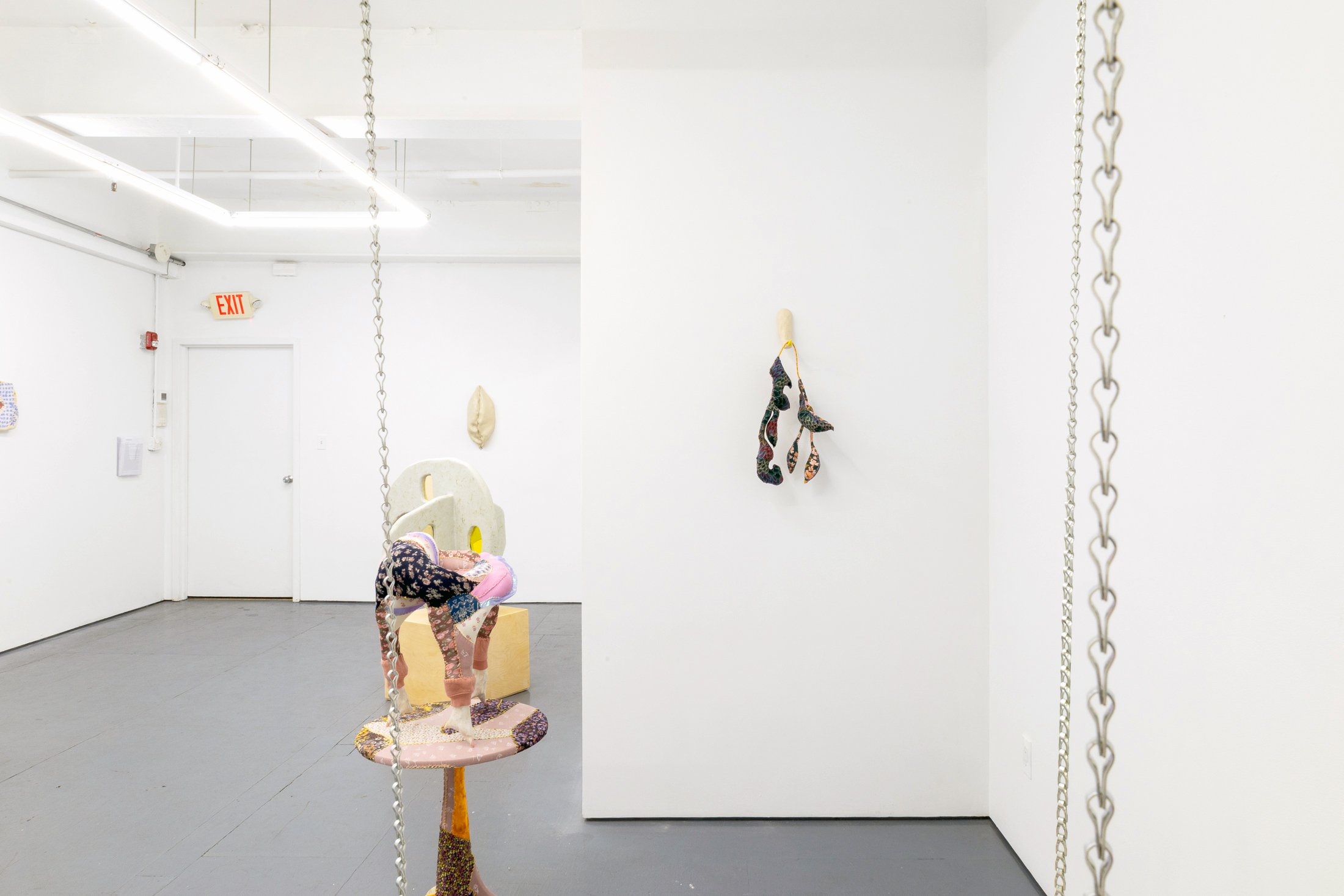
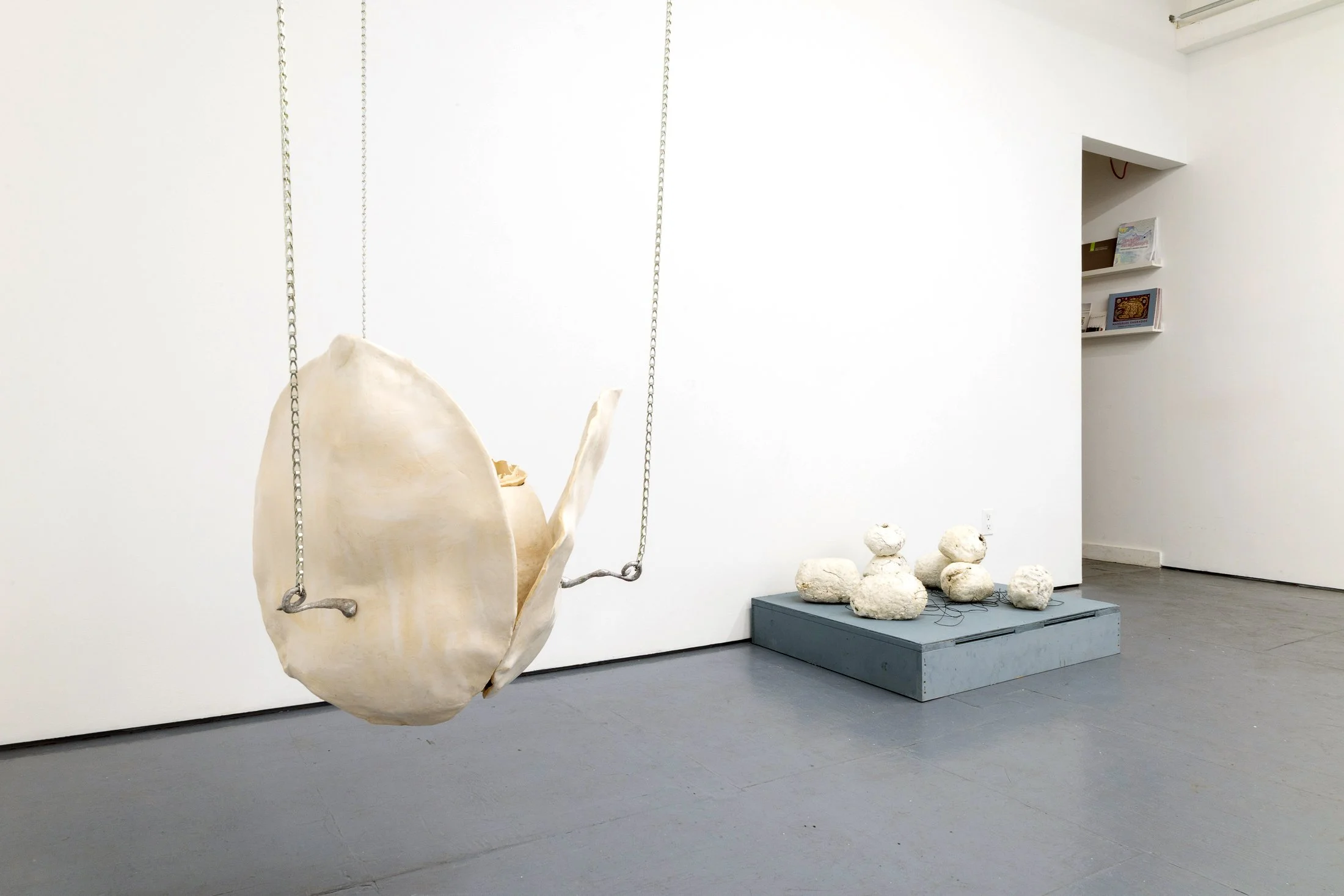
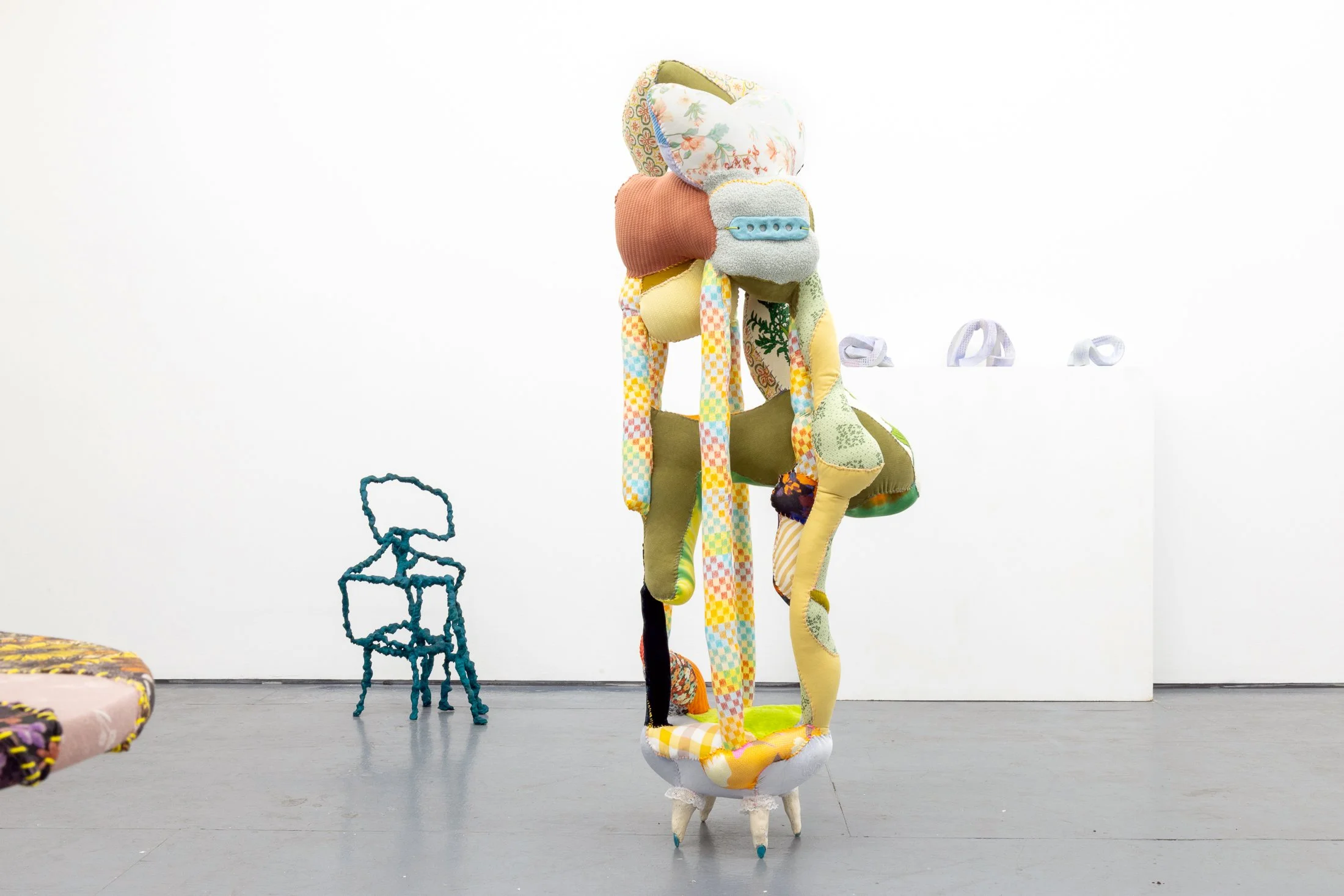
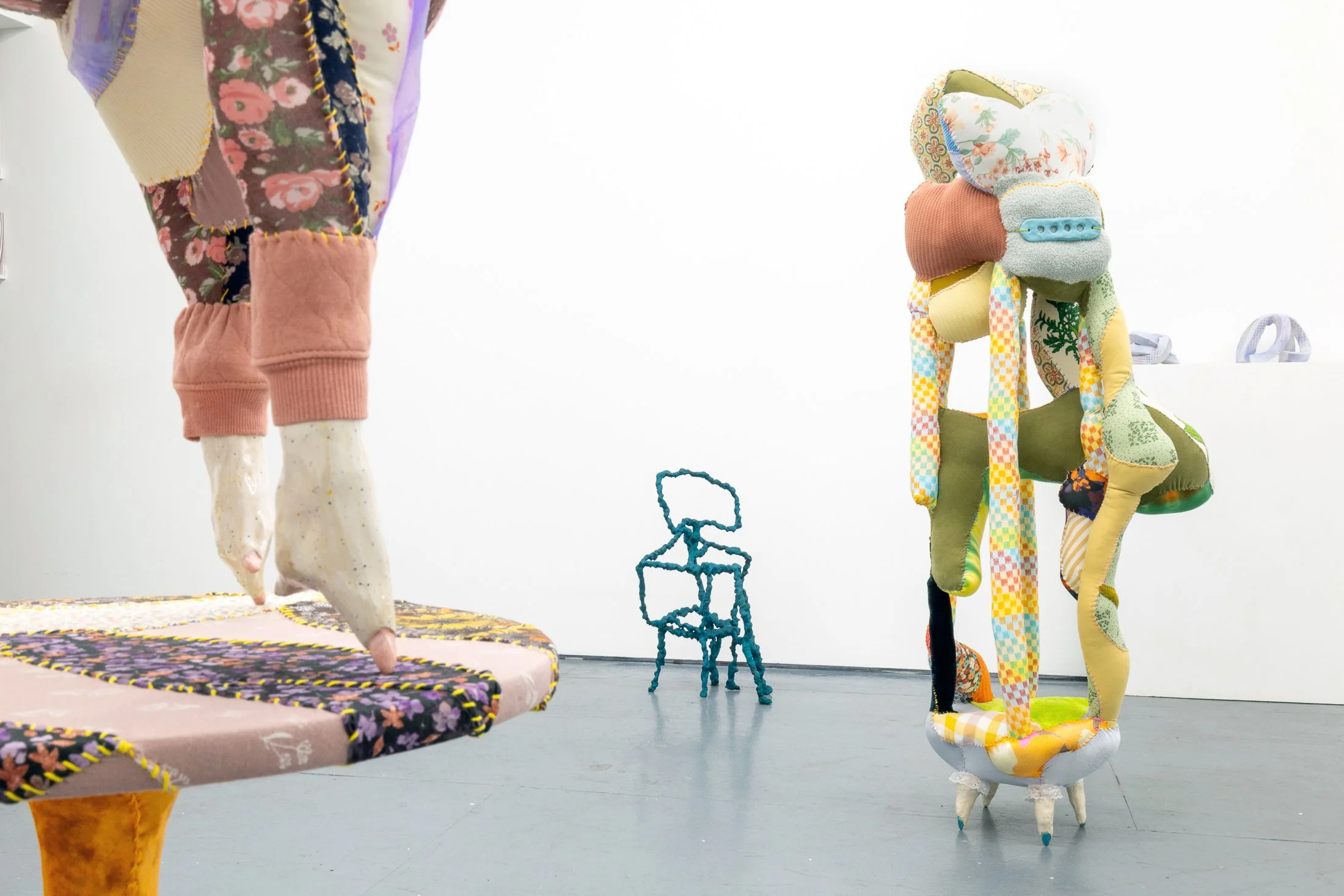
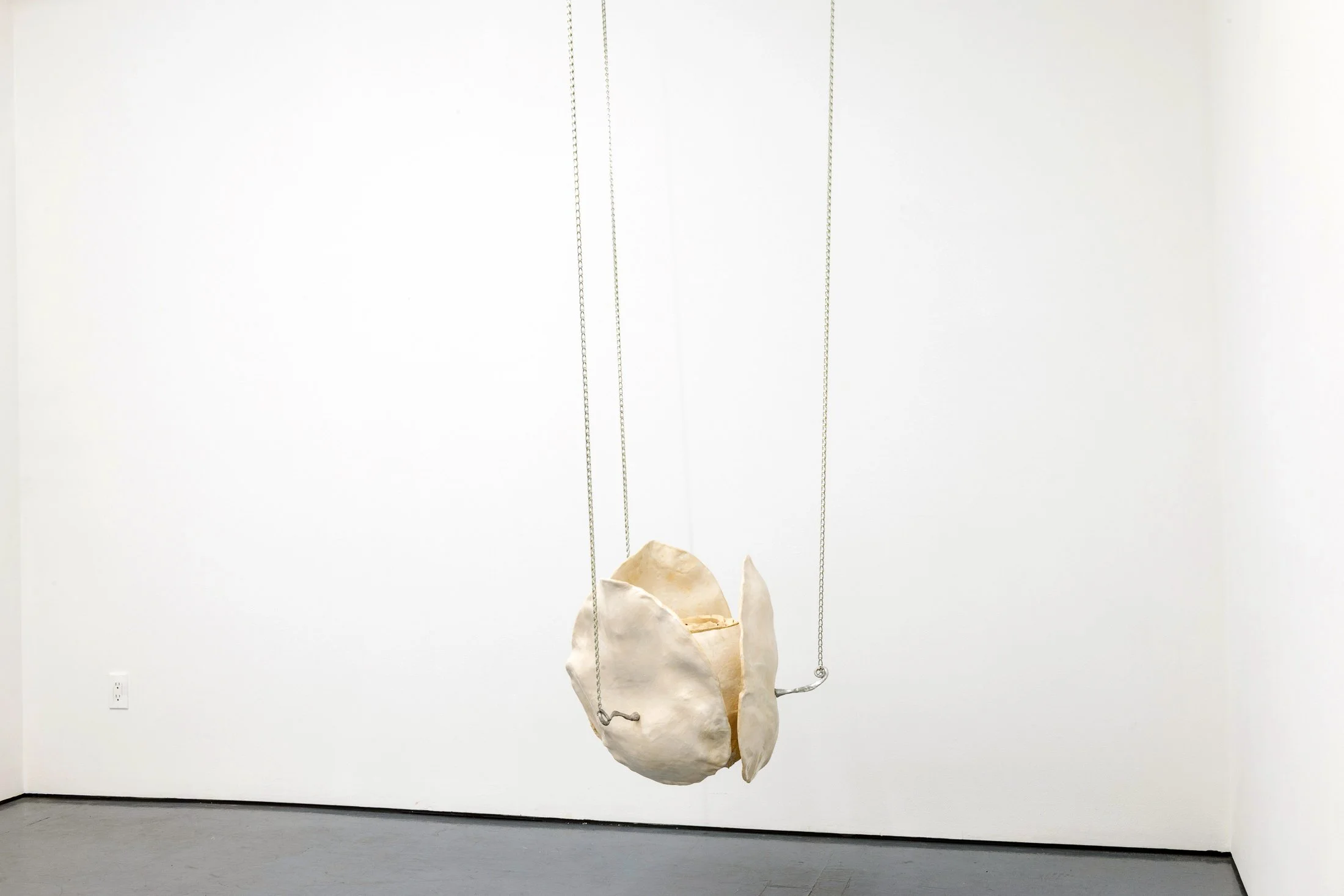
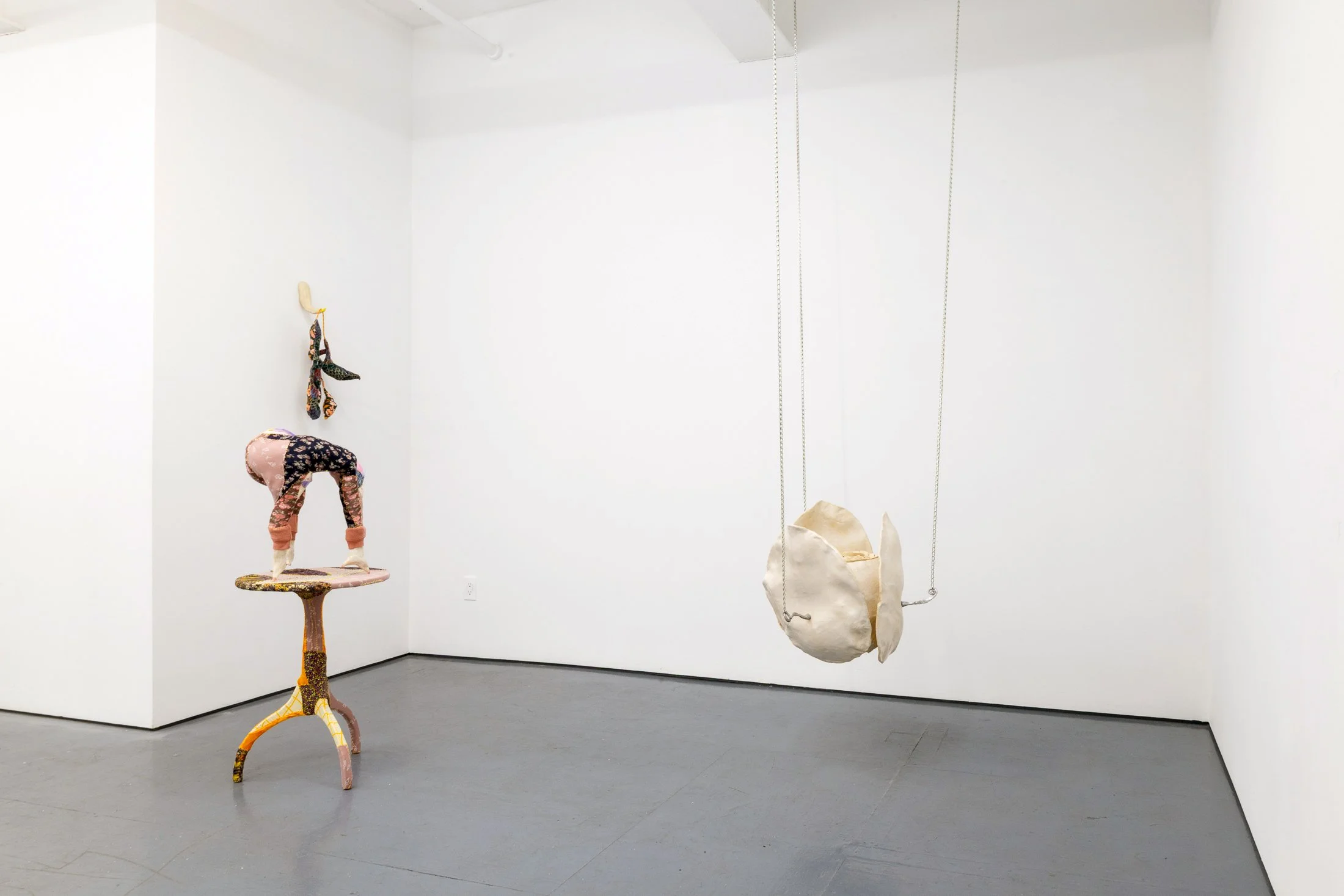
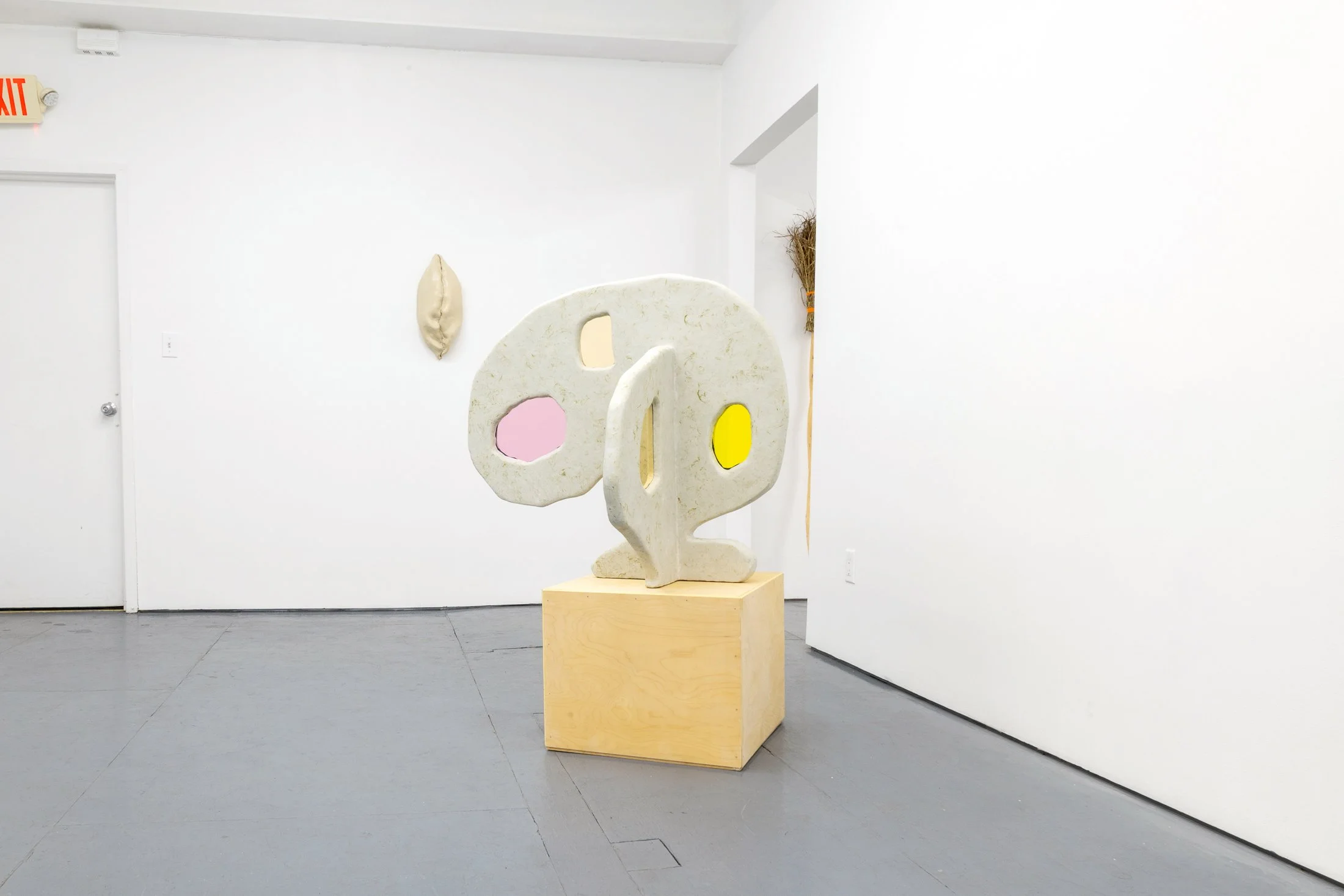
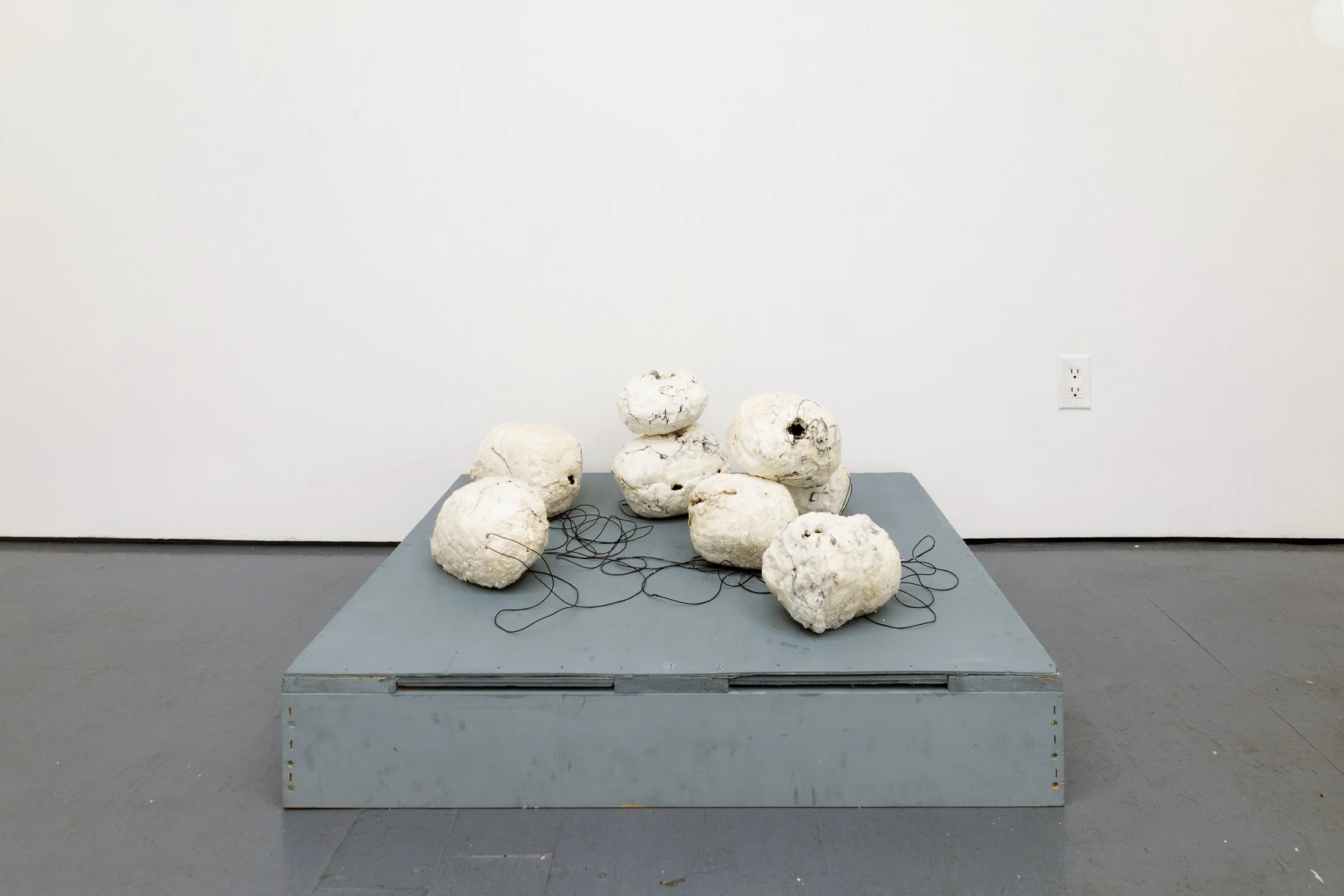
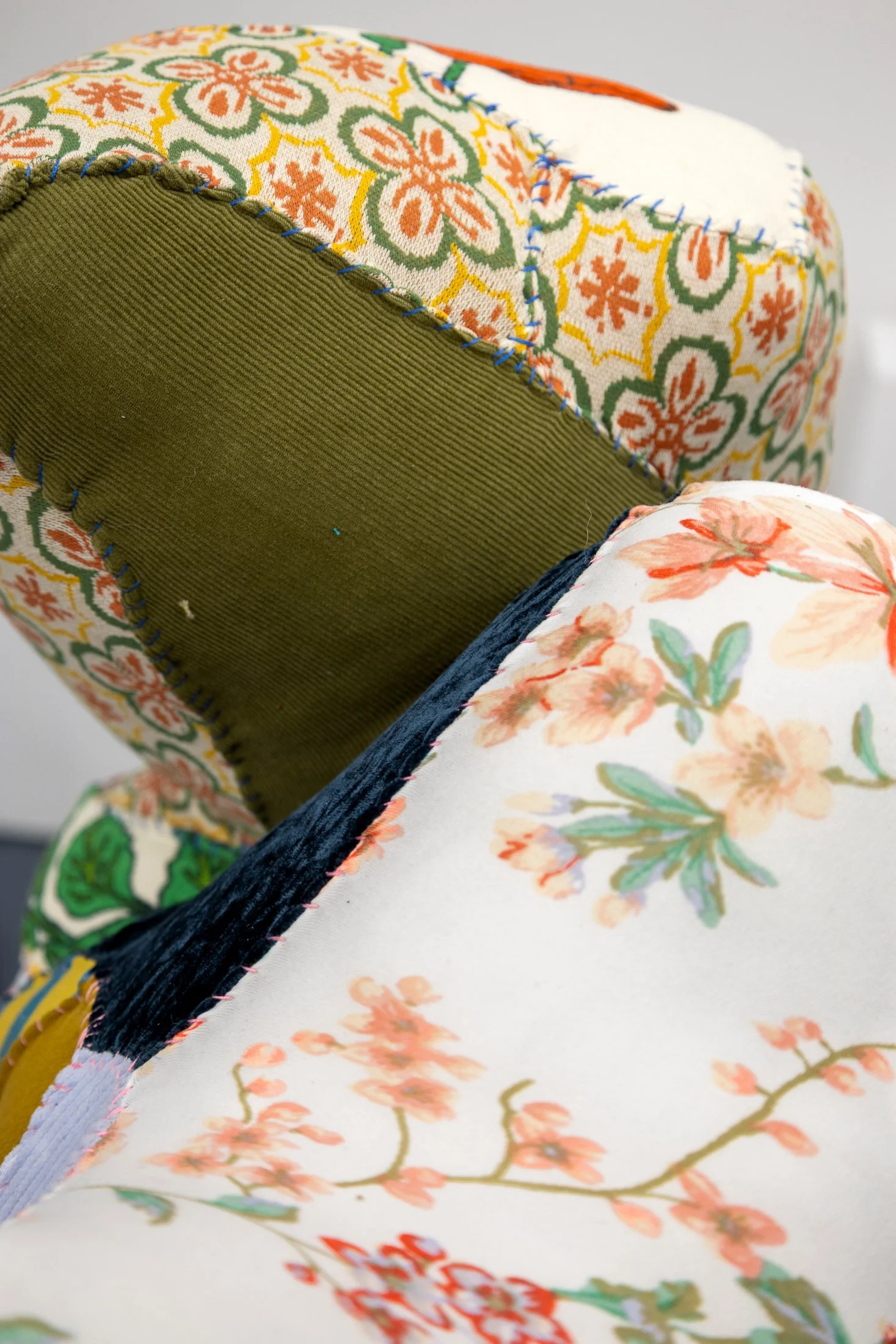
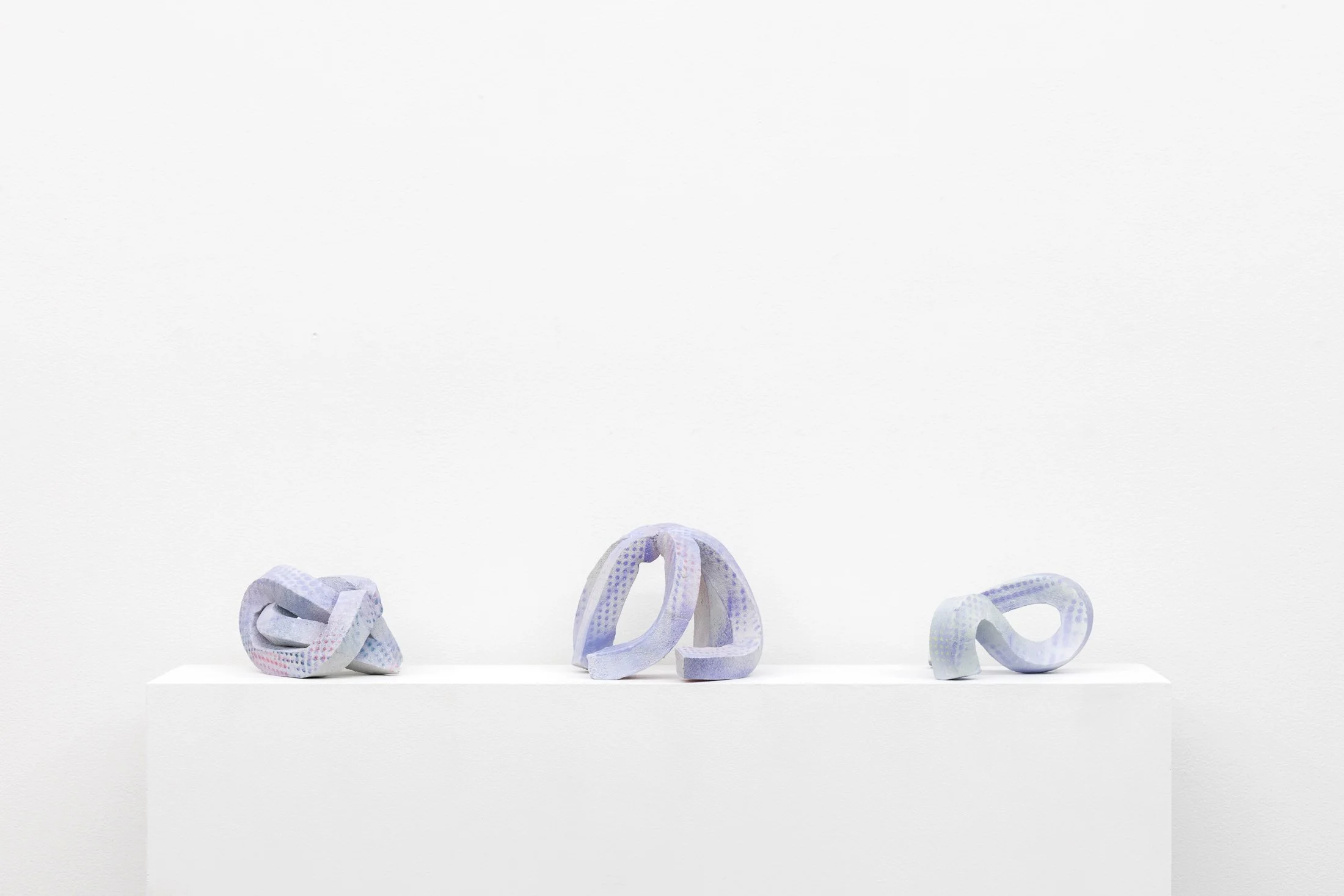
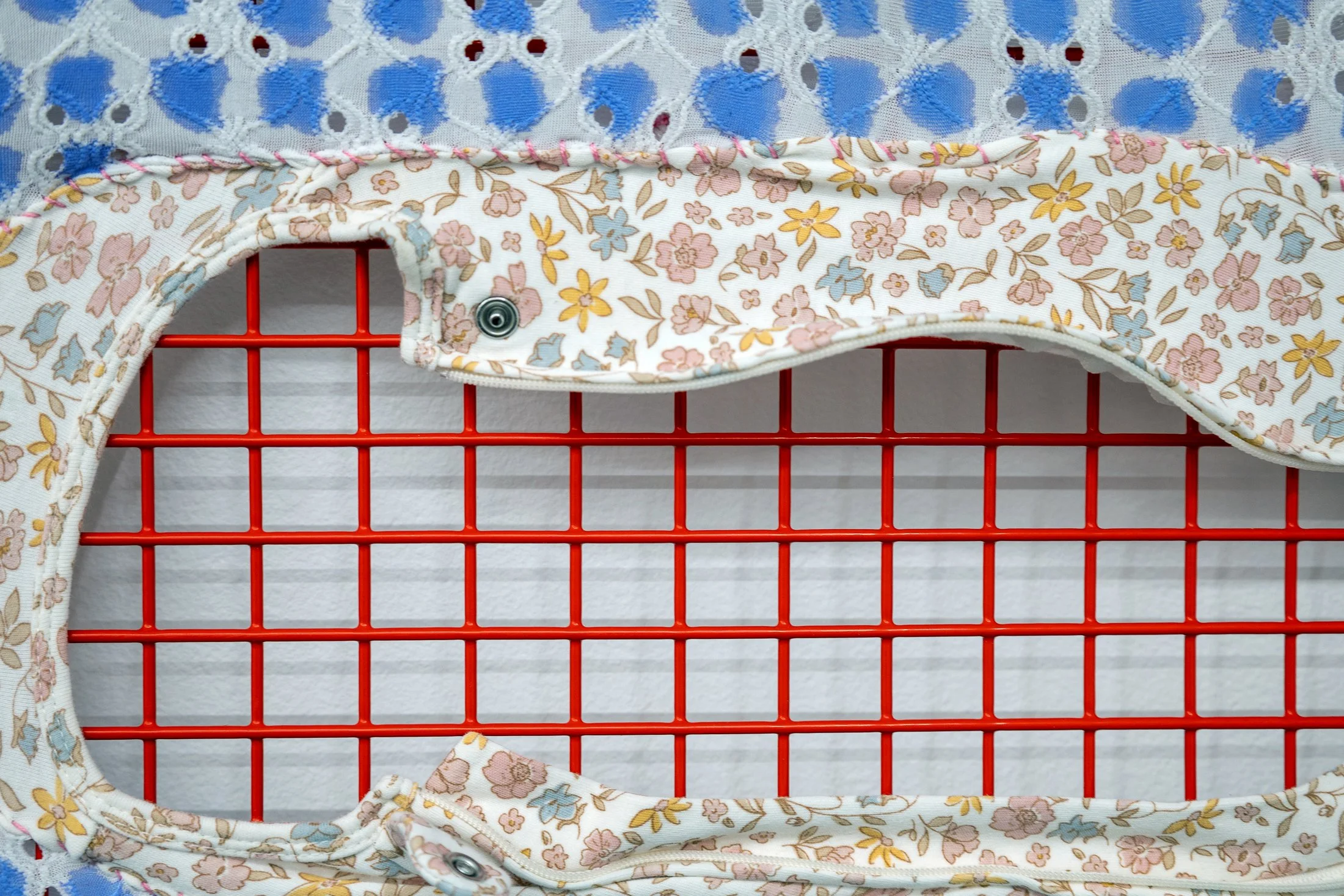
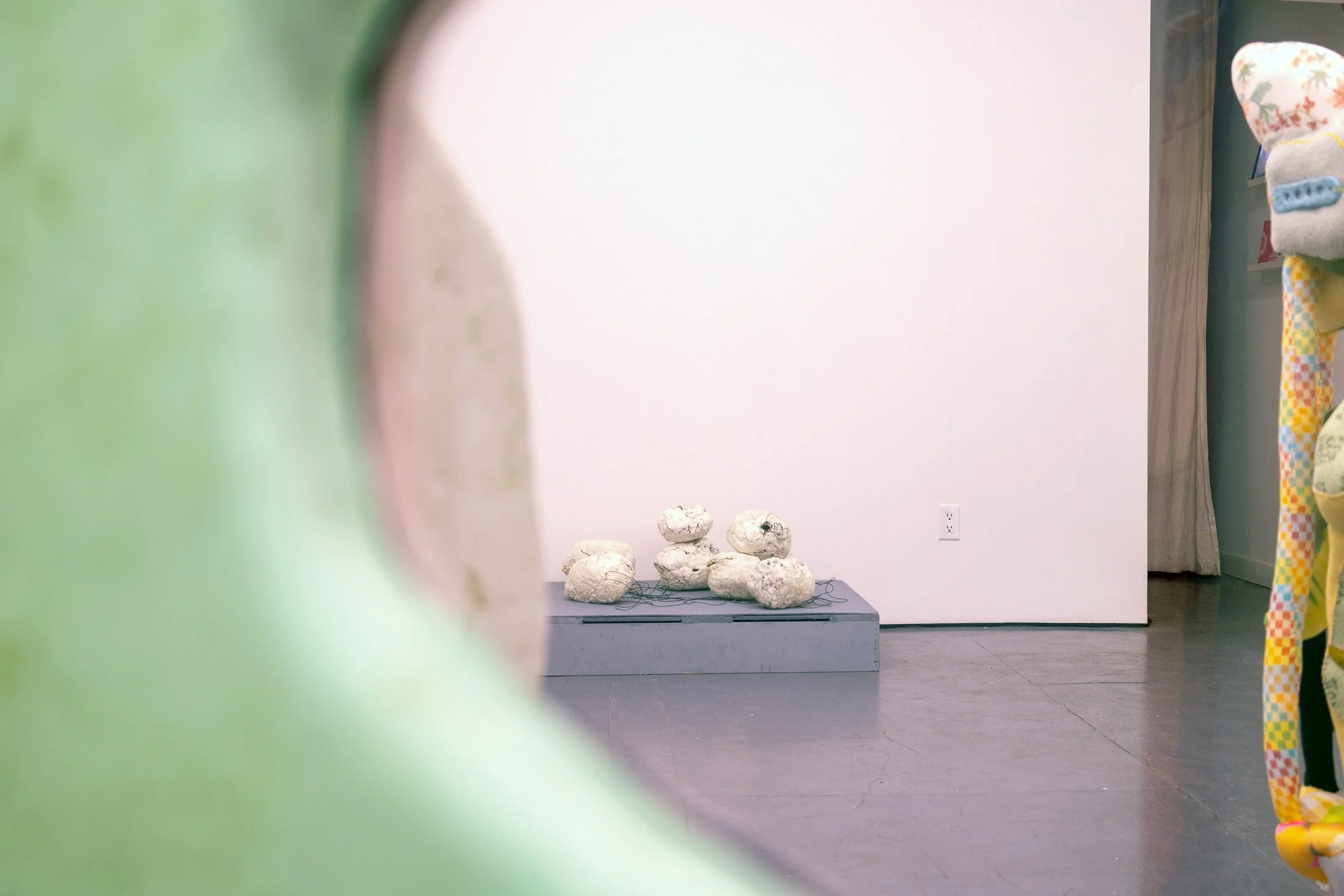
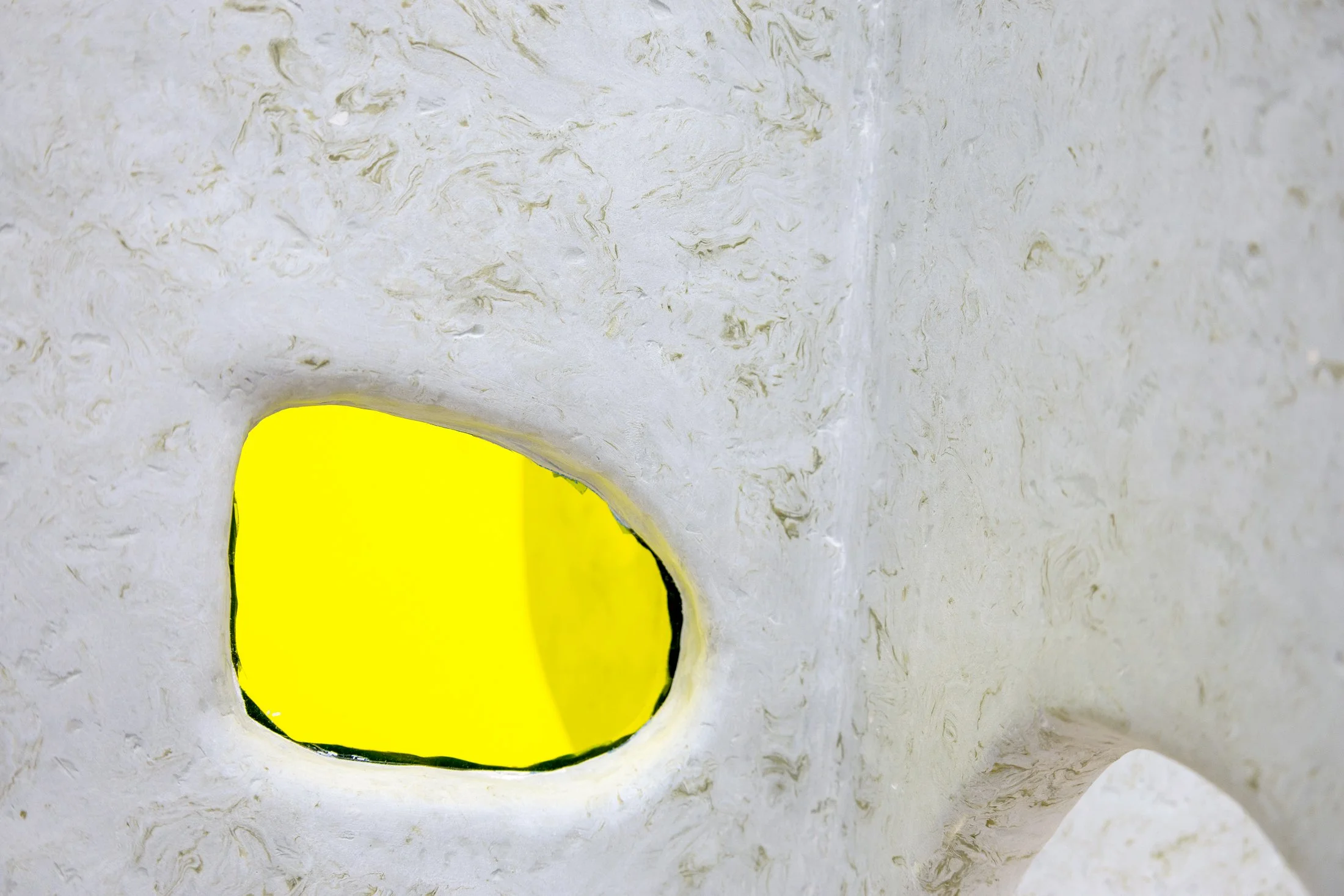
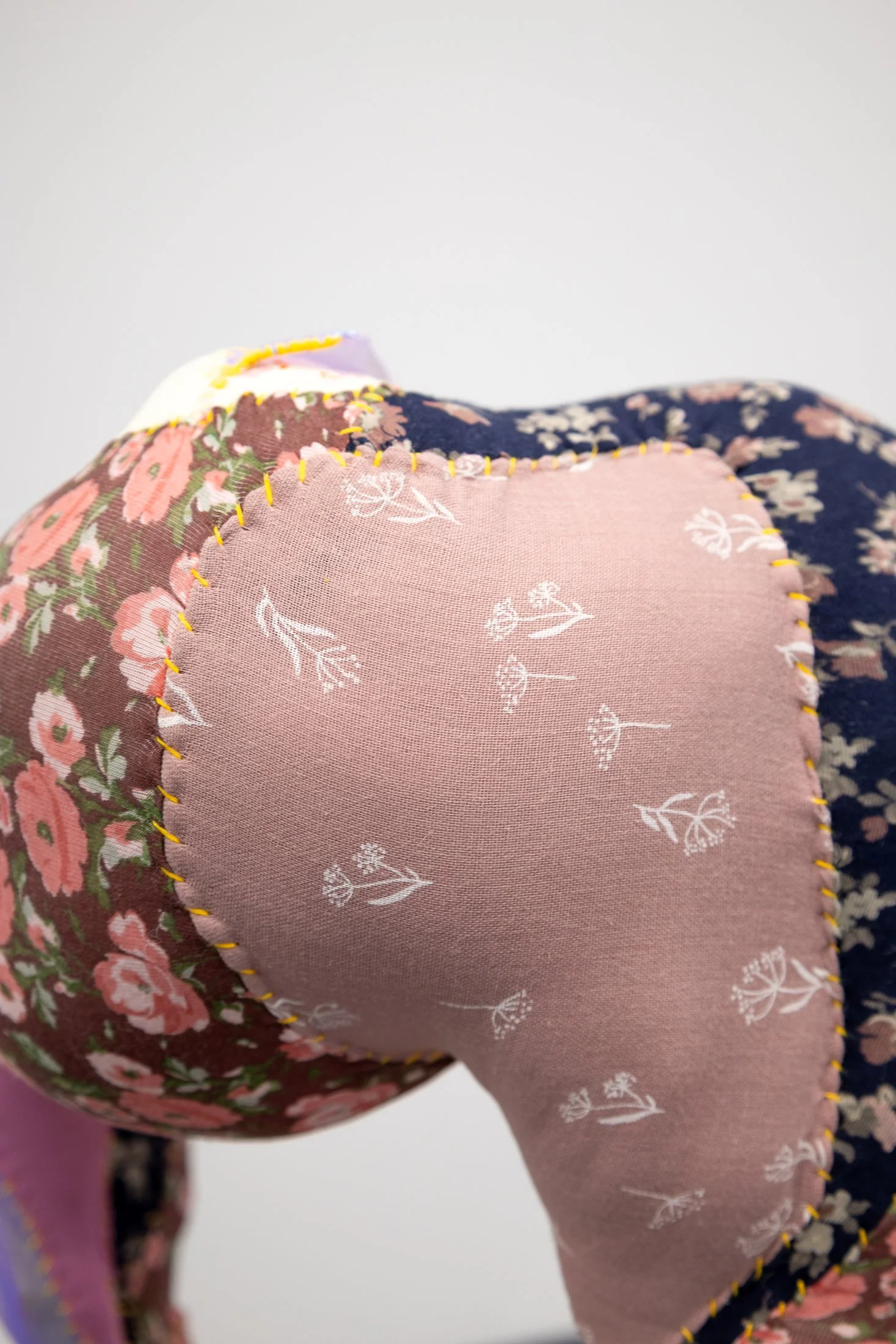
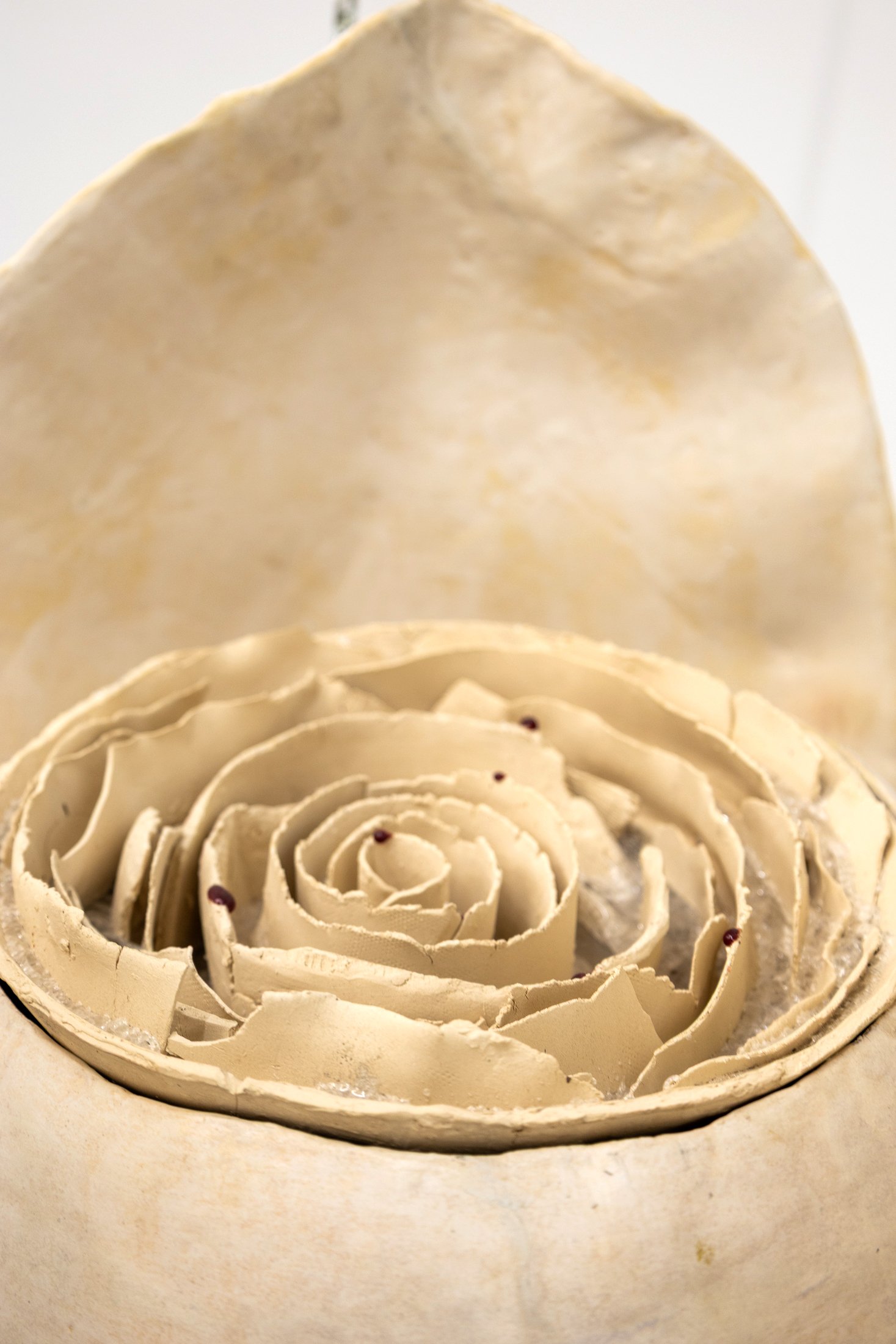
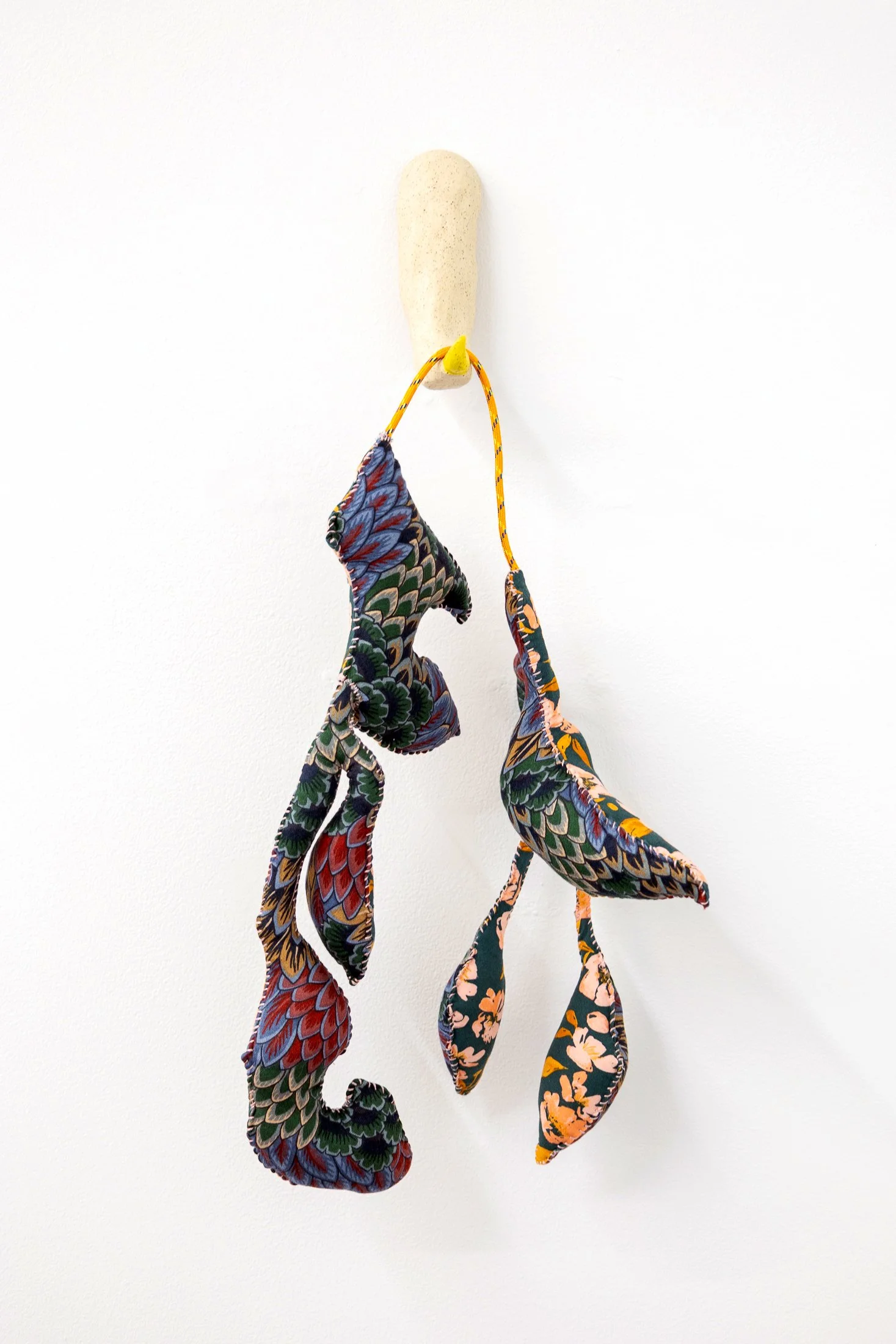
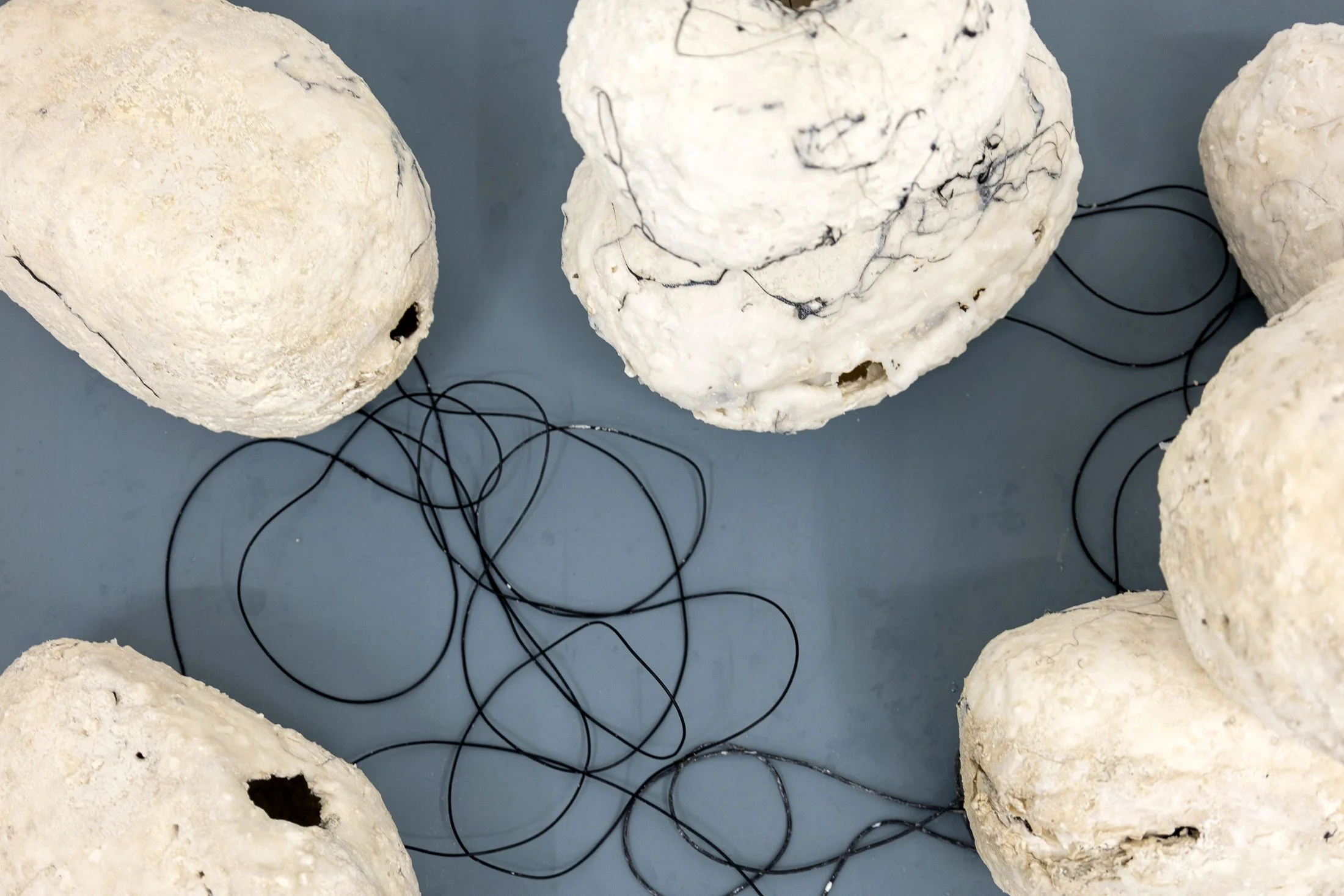
This sculpture exhibition is preoccupied with our inclination to find ourselves – our bodies, and their residue – in materials and forms that are distinctly inanimate. The works included here remind us of the unsettling frequency with which organic forms echo human presence: posture, tension, weight, intention.
The materials these artists engage with vary from organic and mundane to chemical and technical, reinforcing the sense that our desire to invoke the human form and spirit happens across every register of sensitivity.
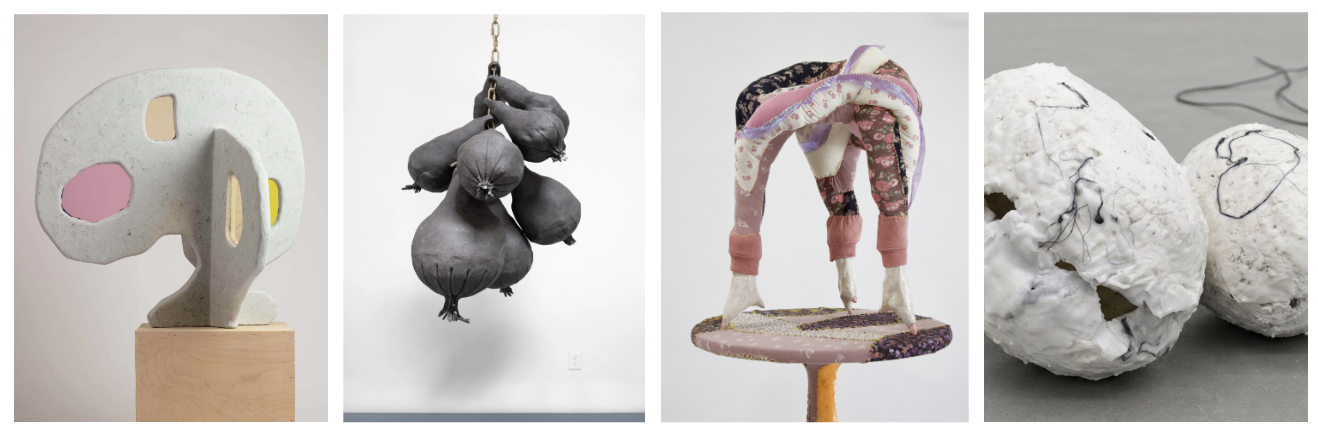
Alison Kudlow weaves together references to our bodies and our ecologies using two of humanity's oldest materials: clay and glass. The works somehow manifest results that feel both otherworldly and deeply of this environment; narratively futuristic and ancient at the same time.
Susan Meyer's pieces similarly feel like they live in multiple timelines. They might be figurative statues from futuristic alien communities, and yet they also tap into our most foundational, age-old sense of body and form. Their presentations morph as we move around them, making us aware of what it means to approach an object as a body vs. an abstraction vs. something in between.
Hanna Washburn's work is perhaps the most emotionally humorous and expressive of the bunch. Her material choices (reclaimed textiles, hand-molded and imprinted ceramic) imply overt narratives of past lives and tender moments of connection. The forms live in a place that feels conjured from a trippy daydream: of course my coatrack is walking itself across the room.
While Washburn's sculptures suggest kinetic play, Se Young Yim's work makes that suggestion operational. The most subtle of motorized expressions, Yim’s sculptures pulse quietly and leave us second-guessing whether everything else in the room is alive and moving too.
These inanimate pieces, full of suggestions and reflections of our own physical existence, are imbued with a kind of spirit. The works here neither correct nor celebrate this very human tendency to identify ourselves in all things. Rather, they catch the moment of involuntary recognition and refuse to let it easily resolve.
Artist Bios:
Alison Kudlow (b. 1981) lives and works in Brooklyn. She earned a BA from the University of Southern California, a post-baccalaureate degree from Brandeis University and an MFA from the School of the Art Institute of Chicago in Studio Art. She has shown at galleries including Asya Geisberg, Swivel, Parent Company, Field Projects, Tiger Strikes Asteroid, UrbanGlass, Underdonk, and at Fullerton College in California and Hunter College in New York. She presented a solo show at Elijah Wheat Showroom’s Brooklyn location in 2019. She was an invited resident at the Art Ichol Center in Maihar, Madhya Pradesh, India in January 2023. She had a solo show, Defensive Strategies for Tender Objects, at Deanna Evans Projects in Spring of 2024.
Susan Meyer’s work has been featured in solo and group shows across the United States, including LABspace Gallery, Hillsdale, NY; Tang Museum, Saratoga Springs, NY; Flinn Gallery, Greenwich, CT; The Museum of Contemporary Art, Denver, CO; The Korean Cultural Center, NY, NY; among others. She has held residencies at MacDowell, Peterborough, NH; Ucross, Clearmont, WY; Anderson Ranch Arts Center, Snowmass Village, CO; Sculpture Space, Utica, NY; and others. Meyer received a B.S. in Studio Art from Skidmore College and a M.F.A. from the School of the Museum of Fine Arts at Tufts University. She teaches at Monmouth University in New Jersey and lives and works in Hudson, NY.
Hanna Washburn is an artist and curator based in Beacon, New York. She is uses recycled textiles and found objects to create hand-sewn sculptures. Washburn’s work has been featured in publications including The New York Times, Hyperallergic, Cult Bytes, and the Femme Art Review. Exhibition venues include SPRING/BREAK Art Fair (New York, NY); the Dorsky Museum of Art (New Paltz, NY); NADA Art Fair (New York, NY); Wassaic Project (Wassaic, NY); Munson-Williams-Proctor Art Institute (Utica, NY); Susan Eley Gallery (Hudson, NY); Sotheby’s Institute of Art (New York, NY); Rice University (Houston, TX). Washburn has held artist residences at organizations including Haystack Mountain School (2023), Monson Arts (2020), Vermont Studio Center (2019), the Textile Arts Center (2018), and the Woodstock Byrdcliffe Colony (2018). Washburn currently works in the Executive Director’s Office of Storm King Art Center in New Windsor, New York. She received her MFA in Fine Art from the School of Visual Arts in 2018, and her BA in Fine Art and English Literature from Kenyon College in 2014.
Se Young Yim is a painter and sculptor whose work begins with stones. These ordinary objects, having accumulated a history of movement, come to resemble faces, bodies, and lives. Her practice moves between stone and egg, stillness and life, inheritance and transformation. Born and raised in Seoul, South Korea, Yim holds an MFA from the School of Visual Arts, New York. Her work has been exhibited internationally, including at GlogauAIR (Germany), CICA Museum (South Korea), as well as Trestle Artspace, Yeh Art Gallery, and Subtitled. NYC Gallery (the US), and has been reviewed in Artspiel and Arte Fuse.